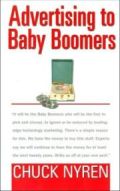
Advertising to Baby Boomers
business blog. You'll find all sorts of information about the history and current trends in advertising and marketing to this unwieldy, diverse demographic - along with a bit of publicity for my book Advertising to Baby Boomers.
2.04.2010
PMP Spring 2010 Marketing/Advertising Catalog
Paramount Market Publishing has just released their Spring Catalog – and it’s a huge one, packed with fresh titles, author interviews, and stacks of real and virtual marketing parchment. Click to download. (PDF):
One title just released, one not quite released:
Custom Surveys Within Your Budget
Maximizing Profits Through Effective Online Research Design
by Brian Cooper and Maria Philips
Custom Surveys acts as a comprehensive guide to cost effectively managing a survey and covers everything from the evaluation of a research program to the actual output and analytics of the research.
Women, Wealth & Giving
The Virtuous Legacy of the Boom Generation
by Margaret May Damen and Niki Nicastro McCuistion
This uplifting book shares the stories of some of these wise women and how they have found fulfillment through giving. With over 43 million boom-generation women at or nearing the age of retirement.
My book is in there somewhere.
And here they are - Jim (The Publisher), Anne (The Art Director), and Doris (The President). They’re all laughing and smiling, reading the eBook edition of Advertising to Baby Boomers.
2.02.2010
It’s Easier Than Learning The Twist!
A good piece by Emily Brandon of U.S. News & World Report (and not only because Yours Truly and Brent Green are quoted):
Social Security Administration Sees Stars
February 1, 2010(Chubby) Checker is the latest star in a series of celebrity-studded Social Security public service announcements that have come out over the past year, most of which feature actress Patty Duke.
I warn against nostalgia because it’s almost always a disaster when used in most advertising campaigns. And I don’t believe employing a celebrity spokesperson is usually a good idea. From Harris Interactive:
CELEBRITY ENDORSEMENTS THAT ARE MOST PERSUASIVE
But Chubby Checker is fine. He represents innocent times. And it’s a public service announcement. Very few people are going to say to themselves, “Gee, I wonder if Chubby is getting the big bucks to push this product/service on me. He probably doesn’t even use it. I’m no sucker! Just because he’s a celebrity I’m supposed to believe him?”
The spot is simple, with a simple message. It works.
1.31.2010
Disruptive Demographics: Global Aging, Technology & Innovation
Complementing Laurie Orlov’s Aging In Place Technology Watch and Dick Stroud’s Mobile apps for Baby Boomers, Joseph Coughlin has a new blog:
Disruptive Demographics: Global Aging, Technology & Innovation
Insights on the impact of aging and technological change on innovations in society, business and government.
Dr. Coughlin heads up MIT AgeLab. He also puts on a great show when presenting at conferences and seminars. Here’s one I had something to do with:
While on a private day-long consult for a major pharma company and their marketing agency, I met Dr. Joseph Coughlin, founding Director of the MIT AgeLab … The numbers-cruncher wore a very conservative, gray suit, the academic a dark pinstripe and loud bow tie, and the ad guy a mock turtleneck and over-the-top orangey sport coat. We were straight from central casting.
Dr. Coughlin’s premiere post dissects the delicate balance between new technology in automobiles and the necessary ‘multitasking’:
How do vehicle designers and engineers manage the marriage between consumer electronics and the dashboard to give drivers the mobile lifestyles they may desire but not the distractions they may introduce?
This will also be an issue when marketing and advertising automobiles with all the fancy gizmos and widgets. The ‘auto’ in automobile is taking on new meanings.
So bookmark Disruptive Demographics.
1.28.2010
Virtual Professor Chuck
It all started around 1999 when I was writing on the web about Baby Boomers. My articles were getting hits from a University of Southern California intranet site. I thought for sure that some professor of English or Literature or an artsy subject like that had made my online scribblings mandatory reading.
Then I found out the truth: the course was about Gerontology.
Skip ahead a few years, and yours truly pens a book about advertising to baby boomers. I was floored when it was selected as a Classroom Resource by The Advertising Educational Foundation. I still get emails from students and professors around the world. The book is in the libraries of many colleges and universities.
Professor Chuck. Funny. At least to me.
Now I’m getting oodles of whacks from another college intranet site – and it seems as if one of my PowerPoint presentations is required watching.
The hits are coming from Southern Oregon University’s Blackboard System.
Those poor kids … having to listen to some old guy ramble on and on …
1.25.2010
A Quick Peek at Retirement Homes of Tomorrow
From MarketWatch:
Rough outlines
By Steve Kerch
… When it comes to retirement living, golf courses are out … Bike paths and walking trails are the new greens and fairways.
As usual, that sounds familiar. Years ago you could’ve had a ‘quick peek’ at this MarketWatch piece. From my book ©2005:
Chapter 4:
Give Boomers Room for Choices
1.21.2010
No News News: Super Bowl Ads Highly Effective
I’m one of the few bloggers to take pride in bringing you no news news. I’ve been offering my readers no news news for years.
With the Death of Television, today I offer you this new no news news:
Super Bowl Ads Still Sell
by Steve Hall/AdRantsDespite the uncertain economy, three out of four Americans are still more likely to research or buy a product after seeing it advertised during the Super Bowl … 64% would be disappointed if advertising during the game disappeared … 66% still remember their favorite brand advertiser from last year's Super Bowl while only 39% remember who won the game.
Feel free to ‘tweet’ or ‘facebook’ this no news news – so a half dozen more people can be enlightened. But please do it before the Super Bowl. Afterwards, hundreds of millions of people will be too busy researching and buying products they saw advertised, and my very important ‘social marketing/viral’ advertising message might get lost in the ethereal vortex.
1.19.2010
The most vibrant and exciting consumer group in the world.
Advertising to Baby Boomers is #1 on my publisher’s bestsellers list.
My best guess why: I’d love to say it’s the book, the reviews, the word of mouth in marketing circles – but I bet it’s simply the subject matter. Marketing professionals are finally getting the message from various sources around the world that advertising to Baby Boomers is the smartest business strategy for almost all products and services – and will be for the next fifteen to twenty years.
A quote from the book (©2005, 2007):
It’s going to be up to companies to be proactive when dealing with advertising agencies. Quality control of your product doesn’t stop at the entrances of Madison Avenue’s finest, or at the doors of small local or regional advertising agencies. If companies put pressure on agencies, and demand 45-plus creatives for products aimed at the 45-plus market, then they will find out that Baby Boomers are still “the single most vibrant and exciting consumer group in the world.”
1.15.2010
Say what?
NostraChuckus strikes again.
In 2007 I critiqued some ads for Selling To Seniors. Pulls from one:
Hearing problems as one gets older have affected humankind for eons. For this recent crop of folks over 50, listening to loud music when they were young has had a negligible effect on their hearing loss.
Certainly, a handful of professional rock musicians playing every night for years and years while plopped in front of amplifiers now have some serious hearing problems.
But for 99% of baby boomers, going to a rock concert every so often (even often) has made them deaf? I think not. And even if I’m wrong, why would you want to make your target market feel guilty? Why would you want to beat it over their heads that it’s their fault that they can’t hear their "grandchild’s giggle"?
What about people who did protect their ears, who did "listen" by not listening—and still have hearing loss? This ad makes them feel worse about their predicament. You’re either guilty because you did—or cruelly cheated by fate if you didn’t. While the leading causes of hearing loss are genetic and simply getting older, most studies confirm that everyday life in metropolitan areas is a recent contributor. So lay the blame elsewhere ..
Now there’s this:
Say what? Baby boomers not losing hearing as much as parents did
By John Fauber
While everyday life may be getting noisier, actual hearing loss from one generation to the next has declined, said Weihai Zhan, lead author of the study, which was published Friday in the American Journal of Epidemiology.Overall, the baby boomers had 31% less hearing loss than their parents.
I knew Mom & Dad weren’t playing those Benny Goodman records loud enough.
1.14.2010
If you’re not up on apps …
Dick Stroud is excited. With the help of wise outfit MotherApp®, Mr. Stroud now has his own iPhone app - and a new blog to blog about it:
Mobile apps for Baby Boomers
Everything you could want to know about mobile apps that are especially useful for ageing consumers be they Baby Boomers, Seniors, Matures, 50-plus or even oldies.
I remember the thrill of HTML – and tossing up my first web page in 1996. The second one even had an animated GIF!
There have been a few technological advances since then (although sometimes I wonder how ‘advanced’ they really are).
From my book (page 161):
I have iTunes installed and an iPod is floating around here – but my phone is considered dumb. I don’t plan on sending it to Harvard anytime soon.
However, a very brainy phone with a handful of advanced degrees lives here. Every so often yours truly and Dr. Droid have deep, rewarding, philosophical thumb-dances. Because I’m not nutty about mobile media, I have no idea if Mr. Stroud’s app would work on the thing.
So bookmark Dick Stroud’s companion blog. Or, if you have iTunes and one of those sassy iPhones, download the app.
1.11.2010
Social Marketing on the skids.
There’s a piece in BusinessWeek about social marketing (whatever that means) for the Ford Fiesta:
How Ford Got Social Marketing Right
The idea was: let's go find twenty-something YouTube storytellers who've learned how to earn a fan community of their own. [People] who can craft a true narrative inside video, and let's go talk to them. And let's put them inside situations that they don't get to normally experience/document. Let's add value back to their life. They're always looking, they're always hungry, they're always looking for more content to create. I think this gets things exactly right.
Hmmm. Twenty-somethings only. I guess they forgot about this:
What Next From The Crystal Ball of Common Sense?
My point three years ago was that Baby Boomers were buying up those mid-priced boxy cars (even though they were being marketed to college kids and twenty-somethings) because they were easy to get in and out of, easy to see out of, and some had large dashboards that were easy to read. So why not build cars with these and more features for older drivers? And market them as such?
Back to the promotion: YouTube ‘storytellers’ get free cars for six months (or forever, it’s not clear) and drive around, videotaping their exploits.
Sounds like a jingle writing contest to me. Not that social marketing or jingle writing contests are bad things. They’re okay things.
Here’s one of the Ford Fiesta jingles getting attention:
Fine. But for crazy antics, sound effects, and music - I prefer Spike Jones:
More from the BusinessWeek article:
The effects of the campaign were sensational … Ford sold 10,000 units in the first six days of sales. The results came at a relatively small cost. The Fiesta Movement is reputed to have cost a small fraction of the typical national TV campaign.
Except … as a commenter noted:
There is a major blunder in the article: "The effects of the campaign were sensational... Ford sold 10,000 units in the first six days of sales." In fact, the Fiesta is not yet on sale outside Europe and Asia, and no potential customer has so much as driven a US-spec model. The referenced "sales" are most likely the non-binding, no-deposit reservations made on the Fiesta website. The cars used in the campaign were European-market loaners, and we'll have to wait a few months to see how many North Americans actually buy the car.
Yes, we’ll have to wait and see. We’ll also have to wait and see how long Ford waits (after cars are in lots) before they decide to do what they do in England … making the Fiesta a top seller. It’s called advertising:
And when it comes to viral videos of the Ford Fiesta – here’s the most popular one of all – uploaded and ‘remixed’ by dozens of ‘citizen marketers’ and seen by millions:
1.05.2010
Twiggy & Me
As most of my readers know, NostraChuckus’ predictions are uncannily somewhat accurate. After all, those are hazy images in that crystal ball. The Great Soothsayer can’t always make out the details, the wrinkles.
And you’re not supposed to, either – especially when gazing into ads for cosmetics.
A couple of years ago, NostraChuckus was the only one to divine the real photoshopped picture from the fake (read the comments):
Another Online Diviner, Ronni Bennett, is rarely, if ever, fooled:
The Ad is a Fraud
Eagle-eye Ronni Bennett unmasked this ad for a wrinkle cream:
Now, Our Mother Country is taking action against such non-magickal practices in advertising:
Twiggy's Photoshopped Olay ads banned in England
… Beauty company Olay debuted its Definity eye cream campaign depicting model Twiggy looking far younger, smoother, and firmer than her then 59 years should suggest. The '60s fashion star appeared virtually wrinkle-free in the ads and, since her baby-faced visage was selling anti-aging cream to older women, quite a few people—including bloggers, news outlets, and the British Parliament—grew quite disturbed.
Way back in July 2009, NostraChuckus mentioned something about Twiggy’s airbrushed Olay ad in one of his lantern and shadow shows. It’s only about a minute-and-a-half in – so you don’t have to watch the whole thing:
![]()
I guess what I find odd is that real Ms. Lawson looks quite attractive to me. A dollop of Olay, a dash of makeup, and she’s good to go. Better than good.
Of course, yours truly at fifty-nine (the same age as Twiggy, give or take a few months) looks years and years younger. I have to get graphic artists to add wrinkles, flaps, and fat sags to my images. Here’s a recent untouched one:
![]()
1.03.2010
2010: The Year of The Baby Boomer Brain
Not that the last few years haven’t had plenty of neurons bouncing about and flashing all sorts of surprising info about middle-aged noggins:
What Kind of Genius Are You?
A new theory suggests that creativity comes in two distinct types - quick and dramatic, or careful and quiet …
Baby boomers are smarter than you think
Researchers have confirmed what many mature people already know – intelligence actually gets sharper with age.
But in April get ready for The Book:
The Secret Life of the Grown-up Brain
The Surprising Talents of the Middle-Aged Mind
Barbara Strauch – Author
For many years, scientists thought that the human brain simply decayed over time and its dying cells led to memory slips, fuzzy logic, negative thinking, and even depression. But new research from neuroscientists and psychologists suggests that, in fact, the brain reorganizes, improves in important functions, and even helps us adopt a more optimistic outlook in middle age. Growth of white matter and brain connectors allow us to recognize patterns faster, make better judgments, and find unique solutions to problems. Scientists call these traits cognitive expertise and they reach their highest levels in middle age.
Ms. Strauch is the Medical Science and Health Editor for The New York Times. Her recent piece reads like a warm-up for the book:
How to Train the Aging Brain
Over the past several years, scientists have looked deeper into how brains age and confirmed that they continue to develop through and beyond middle age.
I liked this:
The brain, as it traverses middle age, gets better at recognizing the central idea, the big picture. If kept in good shape, the brain can continue to build pathways that help its owner recognize patterns and, as a consequence, see significance and even solutions much faster than a young person can.
From my book Advertising to Baby Boomers ©2005, 2007:
So a lot of us will be doing a lot of thinking over the next thirty-odd years.